
What Happens When an Electrical Panel Fails? Warning Signs and Solutions
Your home's electrical panel quietly manages electricity for nearly everything you use—from lights and kitchen appliances to air conditioning, computers and EV charging equipment.
Most homeowners rarely think about it until something starts going wrong.
Maybe a breaker keeps tripping. You notice an unusual buzzing sound near the panel. Lights occasionally flicker. The panel feels unusually warm. Or, more concerning, you detect a burning smell.
These symptoms shouldn't automatically be interpreted as proof that the entire electrical panel has failed. A tripping breaker, for example, can indicate a problem with an individual circuit or connected equipment rather than the panel itself.
But some symptoms can indicate potentially serious electrical conditions that deserve professional attention.
Knowing the warning signs—and knowing when to stop troubleshooting and call for help—can help protect your home and family.
What Does It Mean When an Electrical Panel “Fails”?
Electrical panel failure isn't always a single dramatic event where the entire house suddenly loses power.
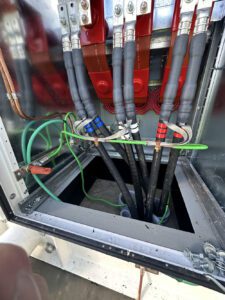
A residential electrical panel contains multiple components that work together to distribute electricity and provide overcurrent protection for individual circuits. A problem can develop with one breaker, a connection, the bus assembly, conductors, grounding or bonding components, or other equipment associated with the electrical service.
In other situations, the panel itself may have sustained heat, moisture, corrosion or physical damage.
Important: “My panel is failing” shouldn't be diagnosed from one symptom alone. A breaker that repeatedly trips, for example, could be operating as intended because another electrical problem exists on the circuit.
The important question is why the symptom is occurring.
7 Warning Signs of Potential Electrical Panel Problems
Some electrical symptoms should never be ignored. The Electrical Safety Foundation International identifies warning signs associated with overloaded electrical systems that include frequent breaker trips, flickering or dimming lights, buzzing sounds, discoloration and burning odors.
Circuit Breakers Keep Tripping
Circuit breakers are protective devices. A breaker opening during an abnormal electrical condition doesn't necessarily mean the breaker or panel is defective.
But frequent or unexplained tripping deserves investigation.
Possible causes can include an overloaded circuit, a short circuit, a ground fault, problems with connected equipment or an issue with the breaker or electrical system.
Repeatedly resetting a breaker without determining why it keeps tripping doesn't address the underlying problem.
If the breaker trips again after being reset—or the problem happens repeatedly—have the circuit evaluated.
You Smell Something Burning Near the Panel
A burning or overheated odor around electrical equipment is a serious warning sign.
Electrical overheating can damage conductor insulation and other components, and unusual odors can accompany deteriorating electrical equipment.
Do not remove the panel cover to investigate the source yourself.
If there is visible smoke, active arcing or fire, move away from the area and call 911. Do not attempt to work inside the electrical panel.
If there is an unexplained burning odor but no active fire, avoid using equipment that appears associated with the problem and arrange for prompt professional evaluation.
The Electrical Panel Is Unusually Hot
Electrical equipment can produce some heat during normal operation, so temperature alone isn't enough for a homeowner to diagnose a problem.
However, unusual or excessive heat—especially when accompanied by an odor, discoloration or repeated breaker problems—should be evaluated.
Potential causes can include excessive electrical load, deteriorated connections or damaged equipment.
Don't remove the panel cover or reach inside to determine what's getting hot. Components associated with electrical service equipment can present severe shock and arc-flash hazards.
You Hear Buzzing, Crackling or Sizzling
Electrical equipment isn't necessarily completely silent, and some devices can produce a faint operating hum.
But a new or pronounced buzzing, crackling, popping or sizzling sound should not simply be dismissed.
If the sound appears to be coming from the electrical panel, have it evaluated rather than opening the equipment and attempting to locate the source yourself.
You See Discoloration or Scorching
Darkening, melted material, scorch marks or other visible signs of heat around electrical equipment can indicate that excessive heat has occurred.
Even if everything appears to be working normally afterward, evidence of overheating deserves professional evaluation.
Heat damage doesn't repair itself when the electrical system cools down.
Lights Flicker or Power Becomes Intermittent
One flickering light may simply be related to the lamp, fixture or individual circuit.
Flickering or dimming occurring throughout multiple parts of the house can indicate a broader electrical issue and should be investigated.
However, these symptoms don't prove the panel itself is defective. Problems elsewhere in the home's electrical system—or potentially on the utility side—can sometimes produce similar symptoms.
Professional diagnosis matters.
There Is Corrosion or Moisture Around the Panel
Water and electrical equipment are a dangerous combination.
Moisture entering an electrical panel can contribute to corrosion and deterioration of electrical components.
Potential sources may include plumbing leaks, roof or wall leaks, exterior moisture or condensation depending on the panel's location.
Visible rust or corrosion around electrical equipment should not simply be painted over or ignored.
The source of the moisture needs to be identified, and the electrical equipment should be evaluated for damage.
Burning Smell From Your Electrical Panel: What Should You Do?
This deserves special attention because homeowners may search for an answer while the problem is happening.
If you smell something burning near your electrical panel, don't open the panel and start looking for the source.
You could expose yourself to energized components, and removing a cover isn't necessary to establish that an unusual burning odor requires attention.
Electrical Emergency
If you see smoke, flames or active arcing, move away from the area and call 911.
Do not attempt repairs inside energized electrical equipment. Never throw water onto energized electrical equipment or an electrical fire.
If there is no visible fire but the odor appears electrical or seems to originate around the panel, arrange for prompt professional evaluation.
Do not continue repeatedly resetting breakers or operating equipment that appears to trigger the problem.
Is a Buzzing Electrical Panel Dangerous?
It depends on what is causing the sound.
That's also why homeowners shouldn't attempt to diagnose a buzzing panel simply by opening it.
A faint operating hum from certain electrical equipment isn't the same as a new, loud or irregular buzzing, crackling, popping or sizzling sound.
Abnormal sounds can accompany electrical problems and deserve evaluation, particularly when combined with:
- Burning odors
- Flickering lights
- Repeated breaker trips
- Heat
- Discoloration
- Intermittent power
If something suddenly sounds different around your panel, don't ignore the change.
Why Does My Main Breaker Keep Tripping?
A main breaker that repeatedly trips is telling you something needs attention.
One possibility is that electrical demand is exceeding what the system is designed to handle. But overload isn't the only possible explanation.
The cause needs to be diagnosed rather than assumed.
Never install a higher-rated breaker simply because an existing breaker keeps tripping.
Circuit breakers and electrical equipment must be properly matched to the conductors, equipment ratings and overall electrical system. Increasing breaker size without properly evaluating the system can defeat important overcurrent protection and create a dangerous condition.
If you're consistently reaching the limits of your existing electrical service, the appropriate solution may involve evaluating the home's electrical load and determining whether a service upgrade makes sense.
What Causes Electrical Panel Problems?
Deteriorated or Improper Connections
Electrical connections need to be installed correctly.
A connection that has deteriorated or wasn't properly installed can generate heat and damage equipment.
Because these conditions can exist inside energized equipment, diagnosing them is work for a qualified professional.
Excessive Electrical Demand
Homes use electricity differently today than they did decades ago.
Depending on the property, modern loads may include:
- Central air conditioning
- Electric ranges
- Electric dryers
- Pool equipment
- Spas
- EV chargers
- Heat pumps
- Electric water heating
- Workshops
- ADUs
- Home offices
- Other high-demand equipment
Adding electrical loads doesn't automatically mean a panel must be replaced. But the home's electrical capacity needs to be appropriate for the loads being served.
Moisture and Corrosion
Moisture can damage electrical equipment and accelerate corrosion.
This is especially concerning when water reaches service or panel components.
Improper Electrical Modifications
Electrical systems are often modified over decades.
Poorly executed additions, incompatible equipment, incorrect breakers or other improper alterations can create problems that weren't part of the original installation.
Damaged Components
Breakers, conductors, panel components and associated electrical equipment can become damaged through overheating, physical damage, environmental conditions or other failures.
Aging and Deterioration
Age by itself doesn't prove that an electrical panel is unsafe.
Two panels of the same age can be in very different condition depending on installation quality, environment, electrical loads and modifications made over the years.
Condition matters more than simply looking at a date.
Can a Bad Electrical Panel Cause a House Fire?
Electrical failures and malfunctions are recognized home fire hazards, which is why symptoms such as unusual heat, burning odors, arcing and damaged electrical equipment should be taken seriously.
Circuit breakers and other protective devices are designed to reduce electrical hazards, but they aren't a substitute for correcting damaged wiring, defective equipment or improper installations.
If electrical equipment shows evidence of overheating or arcing, continuing to operate it without understanding the cause can allow the underlying problem to worsen.
What Should You Do If You Think Your Electrical Panel Is Failing?
What You Should Do
- Pay attention to repeated breaker trips.
- Arrange professional evaluation of unusual odors, sounds or heat.
- Keep the electrical panel accessible.
- Address moisture or water problems promptly.
- Tell the electrician exactly what symptoms you've noticed.
- Move to safety and call 911 if there is smoke, active arcing or fire.
What You Shouldn't Do
- Don't repeatedly reset a breaker that continues to trip.
- Don't remove the panel cover to investigate.
- Don't touch wet electrical equipment.
- Don't install a larger breaker to stop tripping.
- Don't attempt repairs inside energized service equipment.
- Don't ignore burning odors, scorching or unusual heat.
Can a Failing Electrical Panel Be Repaired?
Sometimes.
An electrical problem doesn't automatically require replacement of the entire panel.
For example, diagnosis might identify an issue isolated to a particular circuit or another component rather than widespread panel damage.
In other situations, replacement may be the more appropriate solution.
Factors an electrician may consider include:
- Type and extent of damage
- Evidence of overheating
- Condition of the bus and panel components
- Availability of compatible replacement equipment
- Corrosion or water damage
- Existing electrical capacity
- Previous modifications
- Condition of associated service equipment
- Future electrical requirements
Repair vs. replacement should follow diagnosis. Replacing an entire panel unnecessarily isn't useful. Neither is repeatedly repairing symptoms when the underlying equipment is substantially damaged or unsuitable for the home's needs.
When Is Electrical Panel Replacement the Better Option?
Replacement may be considered when evaluation identifies conditions such as substantial equipment damage, significant corrosion, heat damage or equipment that can no longer be appropriately serviced.
It may also make sense when the homeowner is already planning a significant electrical service change.
For example, suppose a home has an older panel with limited capacity and the homeowner also plans to add an EV charger, electric HVAC equipment and other substantial loads.
Rather than treating each issue independently, an electrician can evaluate the overall electrical system and determine whether a properly planned panel or service upgrade is the better long-term approach.
For more information, see our guide to How Electrical Panel Installation Works .
Does a Bad Electrical Panel Mean You Need to Rewire the House?
No—not automatically.
The electrical panel and the branch-circuit wiring throughout the house are related, but they're not the same thing.
A damaged panel can potentially be replaced while much of the existing branch-circuit wiring remains in service if that wiring is suitable.
Conversely, installing a new panel doesn't automatically correct problems that may exist elsewhere in the home's wiring.
An electrician needs to evaluate the actual conditions rather than assuming either:
“New panel = whole-house rewire”
or
“New panel = everything else is fine.”
Neither conclusion should be made without evaluating the electrical system.
Should You Upgrade to 200 Amps When Replacing a Panel?
Not automatically.
If the panel needs replacement, it can be a logical time to evaluate whether the home's existing service capacity still makes sense.
But the answer should come from the home's electrical loads and anticipated needs—not simply from the assumption that every modern house requires 200 amps.
An electrician may consider current and future loads such as:
- EV charging
- HVAC
- Electric water heating
- Electric cooking
- Pool or spa equipment
- ADUs
- Remodels
- Additional appliances
If the existing capacity is adequate, increasing service capacity may not be necessary.
If the load evaluation indicates additional capacity is appropriate, combining the projects may make sense.
Read our 100 Amp vs. 200 Amp Electrical Panel guide for a deeper explanation.
Can an EV Charger Overload an Electrical Panel?
An EV charger adds another electrical load to the home, but installing one doesn't automatically overload an electrical panel.
The important question is whether the home's electrical system has sufficient capacity for the proposed charging equipment along with existing loads.
An electrician can evaluate the electrical service, household loads, proposed charger and charging rate.
Depending on the property, the solution might involve available existing capacity, a different charging configuration, load-management equipment or an electrical service upgrade.
Read our complete guide to electrical panel upgrades for EV chargers for more information.
How Can You Help Prevent Electrical Panel Problems?
Homeowners don't need to perform internal panel maintenance themselves.
In fact, the safest approach is to leave work inside electrical panels to qualified professionals.
Don't Ignore Repeated Breaker Trips
A breaker that repeatedly trips is communicating that something isn't right.
Find the cause rather than repeatedly resetting it.
Keep the Panel Accessible
Avoid blocking electrical equipment with permanent shelving, stored belongings or other obstacles.
An electrician may need safe access during maintenance or an emergency.
Address Water Problems Quickly
If a plumbing, roofing or drainage problem is introducing moisture around electrical equipment, correct the source and have affected electrical equipment evaluated.
Have New Loads Properly Evaluated
Before installing an EV charger, large appliance, pool equipment or another substantial electrical load, determine whether the existing system can support it.
Don't Modify the Panel Yourself
Adding larger breakers, installing incompatible equipment or making unqualified alterations can create serious hazards.
Pay Attention to Changes
If your electrical system suddenly begins behaving differently—new noises, odors, breaker trips, heat or flickering—don't assume it's normal simply because the power is still on.
Electrical Panel Troubleshooting & Replacement in Stockton, CA
If you're experiencing repeated breaker trips, unusual panel noises, burning odors, heat, corrosion or other electrical problems, the first priority is determining what is actually causing the symptom.
The solution may involve a circuit repair, replacement of damaged equipment, correction of an improper installation or, in some situations, an electrical panel or service upgrade.
ASAP Electric provides electrical troubleshooting, panel installation and electrical upgrade services for homeowners in the Stockton area.
The goal isn't simply to replace equipment. It's to identify the problem and determine the appropriate solution for the electrical system serving your home.
Electrical Panel Installation & Upgrade ServicesContinue Reading: Electrical Panel Guides
Frequently Asked Questions About Electrical Panel Failure
Can a circuit breaker panel go bad?
Electrical panels and their components can become damaged or deteriorate. Heat, corrosion, moisture, damaged connections, improper modifications and other conditions can affect electrical equipment. A professional evaluation can determine whether the issue is isolated or whether panel replacement is appropriate.
Why does my electrical panel smell like it's burning?
An electrical burning odor can indicate overheating or damaged electrical components and should be taken seriously. Don't remove the panel cover to investigate. If there is smoke, fire or active arcing, move away and call 911.
Is it normal for an electrical panel to feel warm?
Electrical equipment can produce some heat during normal operation, but unusual or excessive heat—especially when accompanied by odor, discoloration, noise or repeated breaker trips—deserves professional evaluation.
Can I keep resetting a breaker that keeps tripping?
Repeatedly resetting a breaker without identifying why it trips doesn't correct the underlying problem. If a breaker repeatedly opens, have the circuit and electrical system evaluated.
Can a bad electrical panel cause lights to flicker?
Electrical-system problems can contribute to flickering or intermittent power, but flickering lights don't prove the panel itself is defective. Problems with individual circuits, equipment or utility service can sometimes produce similar symptoms.
Does a damaged electrical panel always have to be replaced?
Not necessarily. The appropriate solution depends on what is damaged, the condition of the equipment and the overall electrical system. Some problems may be repairable, while significant damage or other conditions may make replacement appropriate.
Final Thoughts
Electrical panels usually don't announce a problem with a convenient warning message.
Instead, homeowners may first notice a breaker that keeps tripping, an unfamiliar buzzing sound, flickering lights, excessive heat or an unusual odor.
Those symptoms don't all mean the electrical panel has failed. But they shouldn't simply be ignored either.
The safest approach is to identify the cause rather than treating the symptom.
A tripping breaker shouldn't automatically be replaced with a larger breaker. A burning odor shouldn't be investigated by opening the panel. And an older panel shouldn't automatically be condemned solely because of its age.
A qualified electrician can evaluate the electrical system and determine whether the problem calls for a repair, correction, panel replacement or a larger service upgrade.
Remember: Know When It's an Emergency
If there is smoke, active arcing or fire, don't troubleshoot the electrical panel yourself. Move to safety and call 911.
Authoritative Sources & Additional Information
-
Electrical Safety Foundation International (ESFI) —
Home Electrical Safety
ESFI Home Electrical Safety -
Electrical Safety Foundation International (ESFI) —
Don't Overload Your Home
ESFI — Don't Overload Your Home -
California Building Standards Commission —
Current California Building Standards Code
California Building Standards Commission -
California Contractors State License Board —
C-10 Electrical Contractor Classification
CSLB C-10 Electrical Contractor Classification